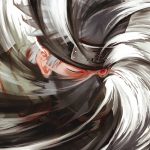
Maegor — The Quietus Edge
In the underbelly of Baldur’s Gate, where guilds are families and families are survival, Maegor once belonged to something rare: loyalty without poison.
A handsome half-orc, unexpectedly refined in presence but unmistakably dangerous, Maegor was raised not in cruelty, but in belonging. His guild was his world—his comrades, his purpose, his identity.
Then they were taken from him.
A rival guild erased everything he loved in a single night of calculated brutality. No mercy. No warning. Only silence afterward.
Maegor did not break.
He sharpened.
Now he walks the line between justice and vengeance, hunting the corruption that destroyed his world—and every evil that reminds him of it.
They call him The Quietus Edge.
Because when Maegor arrives, the ending is already decided.
His combat style is a fusion of precision, control, and overwhelming pressure:
The oathbound fury of a Vengeance Paladin, ensuring no marked enemy escapes consequence.
The uncanny battlefield control of a Swarmkeeper Ranger, manifested through spectral, drifting “jellyfish-like” entities that distort movement, blind reflexes, and disrupt formations.
The elegance and adaptability of a College of Swords Bard, turning every fight into a controlled execution of motion and timing.
Maegor fights with a versatile trident, wielded not as a defensive tool but as an instrument of dominance. Every thrust is calculated. Every sweep disrupts balance. Every step forward removes options from his enemies until they have none left.
In battle, he does not rush.
He compresses the battlefield.
Enemies find themselves slowed, disoriented, hemmed in by drifting spectral swarms that sting at perception and fracture coordination. Then Maegor steps through the chaos—calm, deliberate—and ends what remains.
He is both frontline force and silent control point. A warrior who does not simply defeat enemies, but denies them the ability to fight at all.
Yet beneath the brutality lies a pragmatic mind. Maegor understands the world does not reward impulsive vengeance. Sometimes evil must be watched. Sometimes it must be allowed to believe it has won.
And when it believes itself safe—
that is when he becomes most dangerous.
Because Maegor does not forget.
He does not forgive.
He only delays the moment of judgment until it guarantees total collapse.
To his enemies, he is not a hero. Not a knight. Not a merciful avenger.
He is an ending that moves silently through water and air alike.
Maegor — the Quietus Edge.